
On 6 October 2026, the National Medical Commission (NMC) issued new guidelines on ethical advertising and public communication for doctors and hospitals, effective immediately. For anyone running a clinic, one question follows straight away: what happens to Google reviews?
The honest answer is that some practices are clearly off limits, while others sit in a grey area. This guide separates the two so you can build a trustworthy Google presence without risking your registration or reputation. It is general information, not legal advice. Read the NMC’s public notice yourself and check your specific case with a legal advisor.
News coverage of the notice highlights several rules that touch reviews and testimonials directly:
● Fake, paid, or manipulated reviews are banned. Doctors and
hospitals may not buy, procure, or publish them, and a
registered practitioner may not request or share patient
testimonials or reviews for promotion on social media, as
South First reports.
● AI-made testimonials are banned. Synthetic patient voices,
experiences, and clinical outcomes are not allowed,
according to Deccan Chronicle.
● Superiority claims are restricted. Phrases like “best
doctor” or “100% success” fall under the same coverage, as
does paying to manipulate search visibility.
● Inducements are barred. Discounts that solicit patients
and payments tied to procuring patients are prohibited, and
the rules reach agencies and influencers too, per The Policy
Edge.
● Consent isn’t a loophole. One summary notes that
promotional testimonials and before-and-after outcomes stay
prohibited even when the patient agrees, via OC Academy.
What remains allowed is factual, non-promotional health education, and hospitals may share objective details such as their name, location, and facilities, as Medical Dialogues explains.
This is the grey area. A Google review is written by a patient on a third-party platform, and the reports I reviewed focus on requesting or sharing reviews for promotion and on buying or manipulating them. None of the coverage settles whether a neutral invitation to review on Google counts as a “request.”
The cautious reading is that asking patients for reviews could be treated as promotion. Until the NMC clarifies or your legal advisor confirms a safe approach, the careful position is simple: don’t request, reward, script, or republish patient reviews. This also protects you from a second set of rules, because Google has its own.
Even where the NMC allows something, Google may not. In April 2026, Google added bans on merchants telling staff to collect a set number of reviews or reviews that name a staff member, as PPC Land reported. Incentives for reviews were already banned, and so is paying to remove or change a negative one, according to Search Engine Land. Filtering who you ask, known as review gating, is also against Google’s policy.
In short, a clinic that stays within both rulebooks does not offer rewards, set quotas, filter patients, or buy anything.
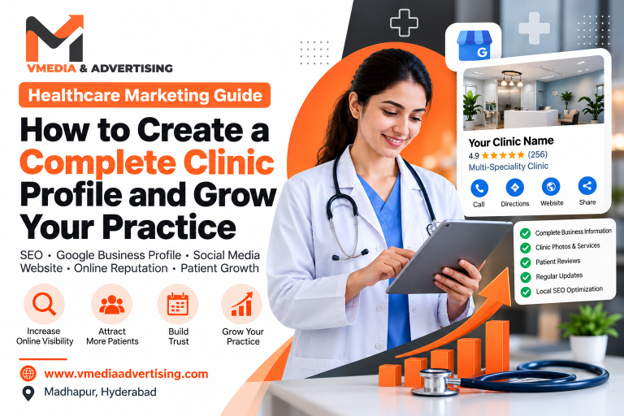
Reviews are only one part of how patients find you. These steps are safe, factual, and still help your local visibility:
● Complete your Google Business Profile. Add your exact
name, address, phone number, hours, specialties, and
facilities. This is the objective information the NMC
allows.
● Choose accurate categories and services. List what you
actually offer, without superlatives such as “best” or “No.
1.”
● Show the clinic, not the patients. Photos of the
reception, consultation rooms, parking and entrance help,
and they avoid privacy issues.
● Fix the experience. Shorter waits, clear billing, and
patient-friendly communication are what people write about
when they choose to review.
● Publish factual health education. Clear, evidence-based
articles on your healthcare website build trust without
promoting your services.
● Make contact easy. A visible phone number, WhatsApp link,
and appointment form turn a search into a visit.
● Reply carefully to existing reviews. Keep replies short,
factual, and non-promotional, and never confirm that the
reviewer was a patient or mention treatment details. Ask
your advisor how far to go.
You can read more about healthy online habits for hospitals in our guide to digital marketing for hospitals and clinics in Hyderabad .
If any of these are part of your routine, review them with your team this week:
● Review QR codes, scripts, or WhatsApp messages that ask
patients to post on Google.
● Weekly review targets for reception or nursing staff
● Discounts, free consultations, or gifts linked to a
review
● Buying reviews, or using agencies or freelancers who
promise a number of them
● AI-written reviews or testimonials of any kind
● Screenshots of patient reviews on your website, Instagram,
or ads
● Profile names or descriptions that claim to be the “best”
or “top” in your area
● Before-and-after photos or patient videos used for
promotion
Do Google reviews still matter for local ranking? Yes, but they are one signal among several. Relevance, distance, and the completeness of your profile matter too, so a well-built profile still performs.
Can I show Google reviews on my website? The reported rules bar sharing patient testimonials for promotion, so avoid republishing reviews until you have clear guidance.
What if a patient gives written consent? Reports say consent does not make a promotional testimonial acceptable, and patient privacy is a separate requirement.
What happens if a clinic breaks the rules? The guidelines reportedly set out graded disciplinary action, as ThePrint covered. Check the notice for the exact consequences.
Does this apply to my agency too? Yes. The rules reportedly apply even when communication is routed through an agency, influencer, or platform.
The NMC’s message is clear: healthcare marketing should inform patients, not pressure or mislead them. For clinics, that means putting accuracy first, building a complete Google profile, improving the real patient experience, and avoiding any shortcut that looks like buying or engineering reviews.
If you want a second pair of eyes on your profile and content, our healthcare digital marketing team focuses on factual, compliant growth through local SEO, website optimization, and educational content. You can also explore our wider digital marketing services or contact us to talk through your clinic’s online presence.


